1. Research the Dive Site
You know the saying- expect the unexpected. Don’t go into a dive site without knowing what you’re getting yourself into. You should know things like the depth of your dive site, if there are any underwater currents for the dive site, and if there are any possible dangers in the site (such as caves, animals, etc.).
2. Bring a Dive Buddy
You should never go on a dive alone. There are just too many variables and things you can’t account for. Say you run out of air 50 feet below the surface? Sounds like the perfect time for your dive buddy to lend you their octo (spare regulator). An accident can happen even in a 10 foot deep pond. Just don’t risk it. You’ll be safer, and you’ll have fun more fun with a dive buddy anyways!
3. Check Your Gear
Before you leave to your dive site, check your gear. Imagine yourself putting on all your gear- make sure all the gear you put on in your head matches what you put in your bag. Once you arrive at the dive site and put on your dive gear for real, check your gear. Have your buddy check your gear too. Make sure everything is assembled correctly and works properly.
4. Leave the Camera at Home
You may want to bring a camera along to film your first dive but don’t bring one for your first few dives. Having a camera and trying to film everything you’re seeing on your first dive is no small task. What you’ll find is you’ll be paying more attention to filming than actually diving. Diving takes practice. What you don’t need is something else to think about. Despite not having a camera, your first dive is something you won’t be forgetting any time soon.
5. Swim without Your Hands
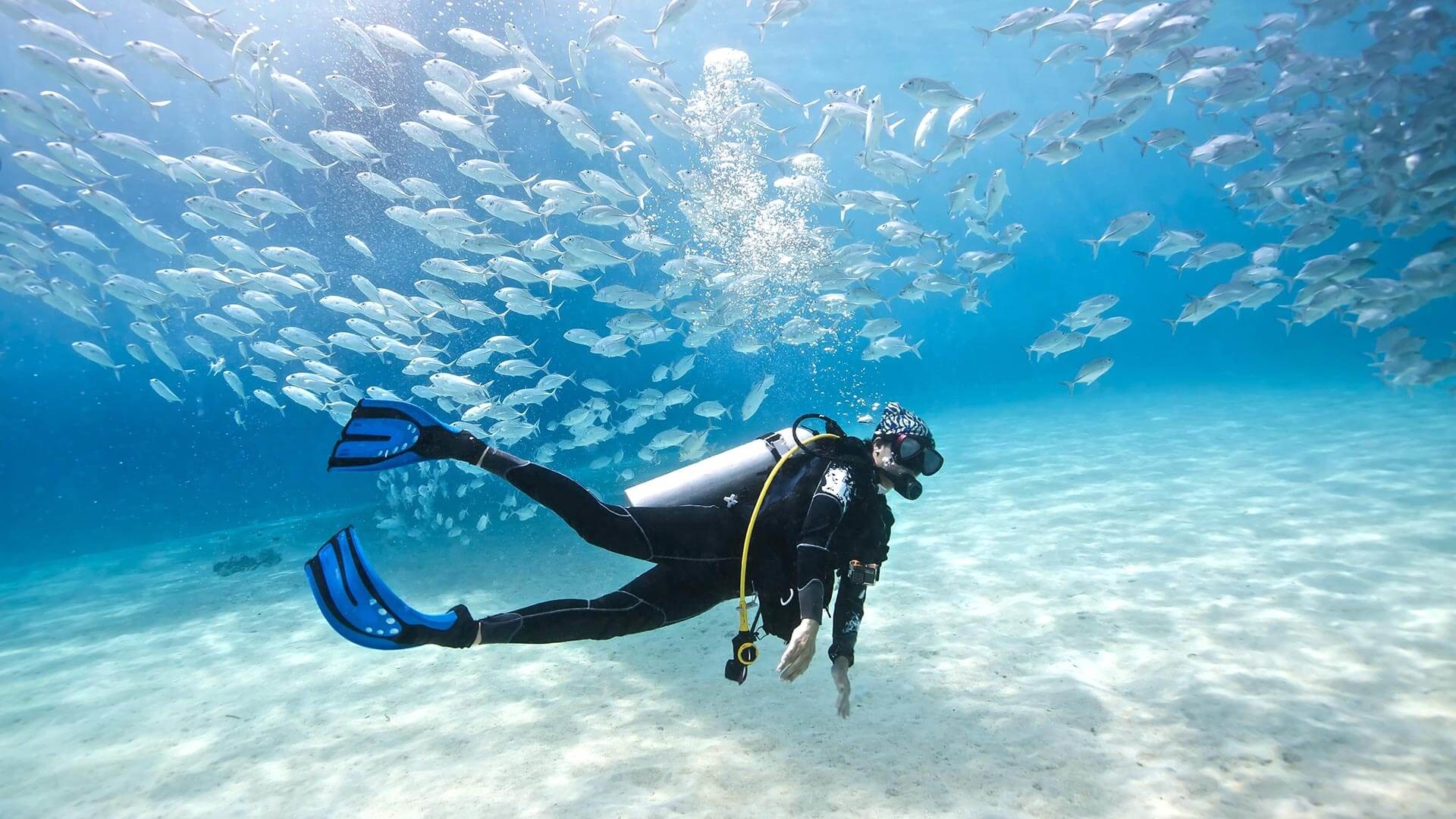
Nothing is worse than watching a new diver flailing every one of their limbs when they’re first diving. The truth is, scuba diving is graceful. If you’re exhausted at the end of a dive, you’re not doing it right. Practice swimming without your hands. Use your fins to swim and your BCD to help you either float or sink. If you can dive without using your hands, you’ll conserve energy, use less air out of your tank, and look like a diver who knows what they’re doing!
6. Breathe, Breathe, Breathe… Mostly
Breathing is such an important part of scuba diving. If you can get your breathing down, you can save a massive amount of air and even establish better buoyancy. You should focus on breathing slowly which allows for you to use less energy and get more air. Just try this exercise: breathe in very fast vs. breathe in slow. Which one gives you a more filling breath?
Along with breathing slowly, you should try breathing deeply. You should be trying to completely fill and empty your lungs. The more complete each breath, the fewer you’ll have to take. The fewer you have to take, the more air you’ll have in your tank.
7. Log Your Dive
After you’ve finished your dive, taken off all your gear, and start to recount the amazing sights you saw underwater, take the time to write everything down in your dive log. A dive log can be an awesome way to remember some amazing memories you’ve made, record your favorite dive locations, and even just keep track of the total amount of dives you’ve done (who doesn’t like to brag sometimes?!).
Got any additional tips or advice for open water dives? Let me know in the comments below!
 Diving Deeper